Tag Archives: Gaming

Armored Core is Back to Bring us Mech Mayhem and Glory

Are we tired of the same old looter shooter or MMORPG-paid DLC expansion? Most of us are, and developer FromSoftware has heard our pleading cries. Armored Core 6 is a third-person shooter mecha game that offers a swarm of options to customize your mech and play-style. Set to release August 25 of, 2023 should you start putting money aside for another $70 purchase, from everything we have seen, this one might be worth the greenbacks.
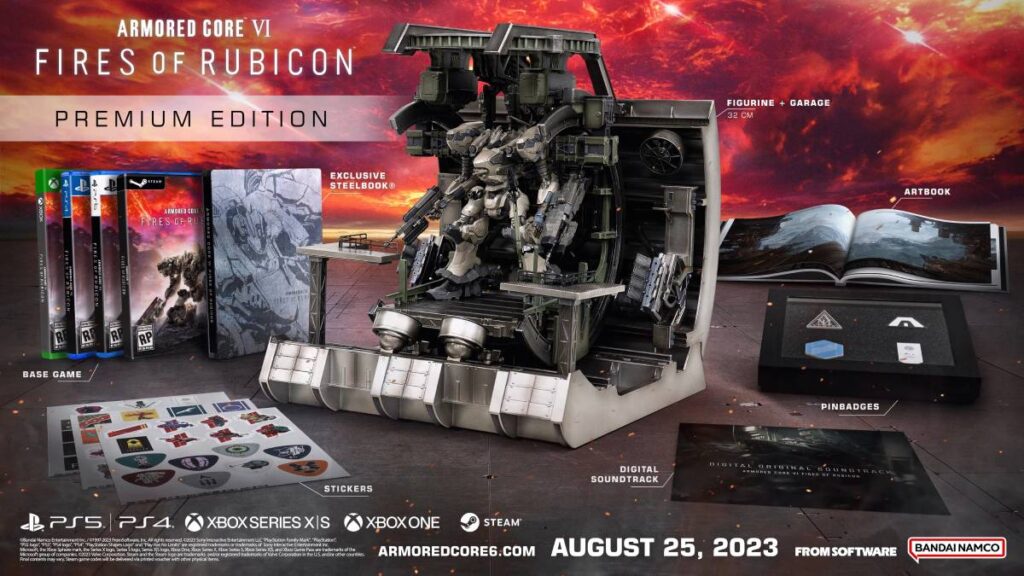
Armored Core VI Premium Edition, avail in the Bandai Namco store

Suppose you are trying to familiarize yourself with the giant robot shooter market. In that case, Armored Core is a great place to start. Since 1997 the franchise has been known for its customizable mechs, or “Armored Cores,” and its focus on strategic gameplay. Over the years, the franchise has released numerous titles on various platforms, including PlayStation, PlayStation 2, PlayStation Portable, and Xbox 360. The games have generally received positive reviews for their deep customization options, challenging gameplay, and engaging storylines.

For this installment, a mysterious new substance called “Coral” was discovered on the remote planet Rubicon 3. As an energy source, it was believed this substance could dramatically advance humanity’s technological and communications capabilities. Instead, it caused a catastrophe that engulfed the planet and the surrounding stars in flames and calamity: Forming a Burning Star System. Almost half a century later, Coral has resurfaced on Rubicon 3, a planet now contaminated and sealed off by the catastrophe. Extra-terrestrial corporations and resistance groups fight for control over the substance. The player infiltrates Rubicon as an independent mercenary vying for a piece of the new energy source.

Gameplay screenshot from Armoredcore.net

According to the games site, players can expect a semi-open world 3d shooter emphasizing mobility and movement maneuvers, a “3D combat mecha action game” that will see players “freely run around the three-dimensional stage with slow and steady three-dimensional maneuvers.” As a result, you can expect a slightly slower experience than you may have seen in Titan Fall 2. The big difference between the two is the movement will be happening while you are in the cockpit of your mech. But, again, basing all assumptions on the image on armoredcore.net: Pilots will take their giant robot to the skies and not just be limited to ground engagements. If conformity is a worry, cast it out of your thoughts. Heavy mech and pilot customizations is the mantra Fromsoftware developers are aiming for.

If you’re wondering why it took Fromsoftware so long to release another Armored Core title (10 years), it certainly wasn’t due to a lack of interest or a fan base. Still, a bustling studio churning out several successful games back-to-back slowed progress, explained producer Yasutaka Ogura. However, technologies like Ray tracing, cross-platform integration, and high-definition screens should help the developers to give us one of the most anticipated Mech mayhem titles yet.

Have you already pre-ordered, or should you wait for the reviews? Available for pre-order on all major consoles and Steam, all the fans can do is wait and hope it isn’t another Bandai cash grab. So leave a comment and what you think about Armored Core 6.

Armored Core VI Official Trailer

Micro-transactions: An integral Part of Gaming or a Grubby Cash Grab

Gamers from all walks of life disagree on the role microtransactions play in the gaming industry. These small in-game purchases, ranging from cosmetic items to in-game currency, have been controversial among gamers and industry professionals alike. While there are arguments for both the positive and negative impacts of microtransactions, balanced, they create a positive effect on gaming culture.

One main benefit of microtransactions is that they provide a steady stream of revenue for game developers and publishers. This revenue can be used to improve through updates and additional content, improving the player experience. Without this revenue stream, game development would be much riskier, as developers would be forced to rely solely on base game sales. In turn, decreasing quality of games as developers’ financial risks increased.

Another positive impact of microtransactions is allowing players to tailor their gaming experience. For example, many microtransactions offer cosmetic items, such as skins or emotes, allowing players to express themselves and stand out. These transactions can enhance the social aspect of gaming, as players can show off their unique characters and items to their friends. Additionally, microtransactions can provide players with in-game advantages, such as boosts or gear. Although some argue that this creates an unfair advantage for players willing to spend money, it can also allow players who need more time to progress through the game without intensively grinding.

Microtransactions can also extend the lifespan of games when developers use microtransactions to fund additional content, such as new levels, missions, and storylines. In addition, DLC can keep players engaged in the game for extended periods, as they have new challenges to overcome and rewards to unlock. This can also lead to increased replayability, as players may want to revisit the game after releasing new content.

However, there are certainly arguments to be made against microtransactions as well. One of the most common criticisms is that they can be exploitative, particularly in free-to-play games. In these games, microtransactions are often the primary source of revenue, and developers may design the game in such a way as to encourage players to spend money. Also, the gap created by real-world currency can lead to frustration or disappointment among players who feel obligated to pay up to progress.

Another criticism of microtransactions is that they can be a form of gambling, particularly in games that feature randomized loot boxes or card packs. Creating visibility some have argued that these mechanics are created to be addictive.

Love them or hate them, microtransactions are here to stay. But with all things monetized, moderation is vital to creating fairness across the industry. So what’s your take on in-game purchases? Leave your opinion in the comments below.

Anthem Player Banned: Using Economic Exploits

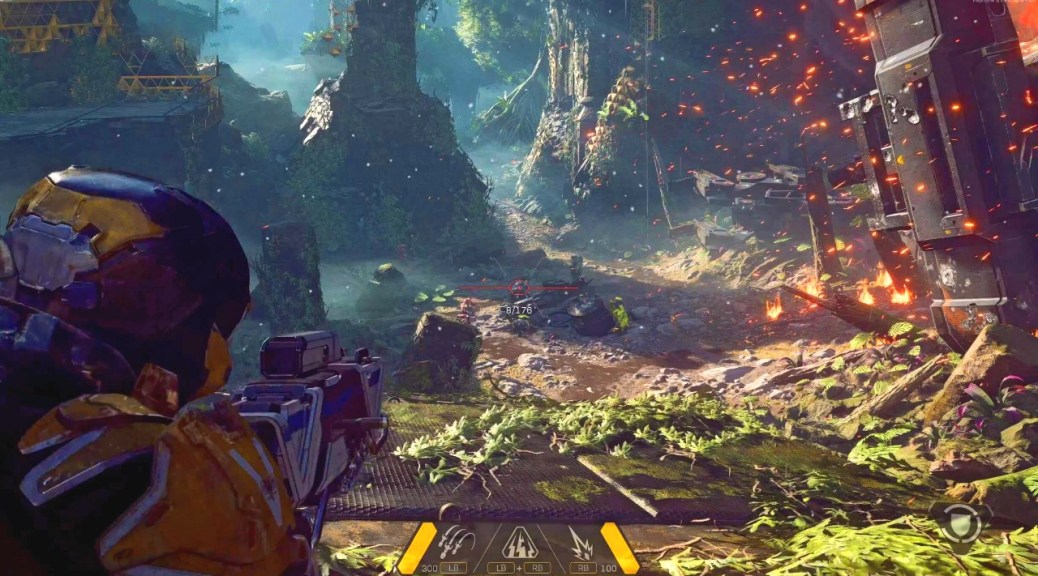
A streamer by the name of Gladd posted a video on his Youtube channel voicing disapproval of Biowares decision to ban him from playing Anthem. The decision behind the ban was based on the use of “economic exploits”. He is known for streaming titles such as Destiny and Division, demonstrating methods of quickly and efficiently grinding out levels and gear.

Anthem’s looter shooter style of play allows players to quickly reach the current set level cap of 30, afterwards advancing through the Javelines power level by equipping gear and improving combat prowess. With any intensive play, grinding the time to find legendary and master level gear can prove to be challenging.

Gladd used an in game functionality to create a method for speeding up this process. By entering into free play mode players are able to set their own difficulty, using the grandmaster difficulty Gladd demonstrated how you can create a pre-planned flight route that is lined with easy to access loot chests. The higher difficulty and increased rate of finding chests almost guarantees players can find masterwork and legendary gear with considerably less effort.

Following the stream to his large fan base Gladd learned that he had been banned from Anthem, after already accruing substantial  game hours.

As Bioware continues to unveil updates, players and fans can continue to count on improvements to the immersive world of Bastion. In the future developers will be faced with the difficult decision of: punishing fans for the use of in game functions or accepting the exploits fans make use of.